//Connected Systems. Reliable Data.
Integrations
& Data Connectivity
/*
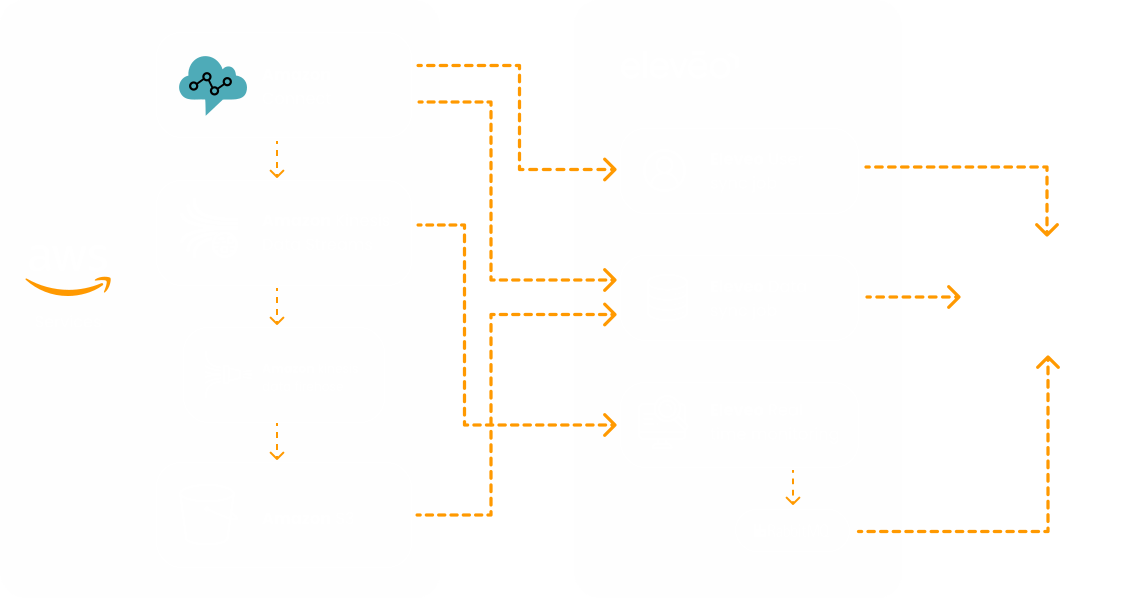
We connect business systems, applications, and data sources into a reliable digital ecosystem. From API integrations and data synchronization to pipelines, reporting, and AI-ready data foundations, we help companies improve data flow, reduce manual work, and gain better control over their information.
Systems
Assessment
We analyze your applications, interfaces, data sources, and business processes to identify gaps, dependencies, and integration priorities. The result is a clear connectivity roadmap aligned with your operational needs.
1
Implementation
& Monitoring
We implement integrations, automate data exchange, and establish monitoring to ensure stable and traceable information flows. We also support ongoing improvements as your system landscape evolves.
3
2
Integration
Architecture
We design a secure and scalable architecture for APIs, data flows, synchronization, transformations, and access controls. The solution is built to support reliable communication between existing and future systems.
- Enterprise System Integrations – connecting ERP, CRM, PIM, WMS, accounting, ecommerce, and internal business applications.
- API Development – designing and implementing secure APIs for reliable communication between systems and external services.
- Data Synchronization – keeping customer, product, order, inventory, and operational data consistent across applications.
- Data Pipelines – collecting, transforming, and delivering data for reporting, analytics, automation, and AI use cases.
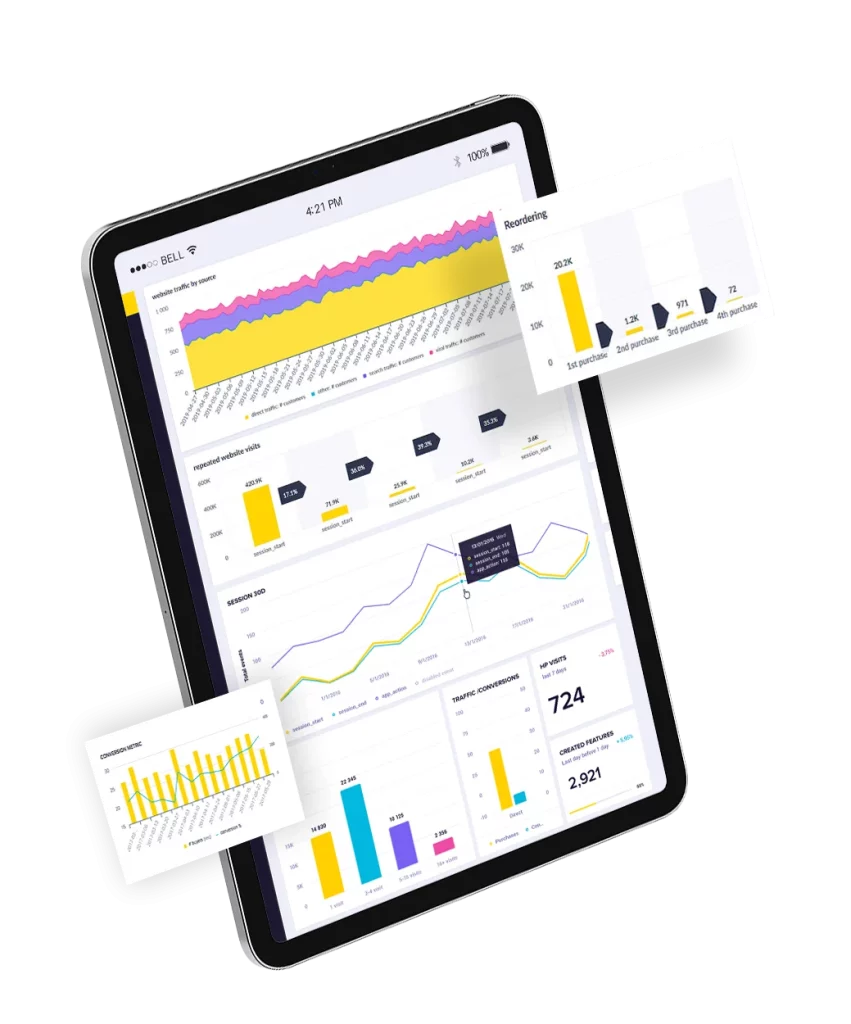
- Reporting & Dashboards – bringing data from multiple systems into clear operational and management views.
- AI-Ready Data Foundations – preparing structured, accessible, and connected data for AI assistants, agents, and intelligent automation.
The most common business challenges we help solve
[1]
Disconnected
Systems
Critical applications operate in isolation, forcing teams to move information manually and making end-to-end processes difficult to manage.
[2]
Inconsistent
Data
Different systems contain conflicting or outdated information, leading to errors, delays, and unreliable reporting.
[3]
Manual
Transfers
Spreadsheets, exports, and repeated data entry consume time and increase the risk of mistakes across departments.
[4]
Limited
Visibility
Management lacks a reliable view of operations because data is fragmented across multiple tools and databases.
[5]
Integration
Complexity
Point-to-point connections become difficult to maintain as the number of systems, partners, and data flows grows.
Connect your systems and turn fragmented data into reliable business information.
Discuss Your Integration Project
Case Studies
Integration of Amazon Connect into a Workforce Management Solution
Integration of the CDXP Platform with B2B Ecommerce | Digital Marketing
Development of a Plugin for ONIX Integration for Aurora Books
Blog

Integration Platform: When Systems Start Working Together
Data becomes scattered, people rewrite it manually, and mistakes multiply. The solution? An integration platform. In this article, you’ll learn how it works, when it makes sense to implement it, its benefits and risks, and which solutions are considered top-tier in 2024–2025.

AI Agents in E-Commerce: Why Integration Matters More Than the Model
Every second CEO today is talking about AI agents — not as experiments, but as real business tools designed to automate processes, work with data,

Discovery Phase: The Path to IT Project SuccessÂ
You have a great idea and a vision of what your application should look like and how it could function. You are at a critical